Tesla Shifts Fremont Line To Humanoid Robots
The automaker has converted its California plant to mass-produce Optimus units, aiming for commercial delivery by late next year.
By Khalid Rahman ·
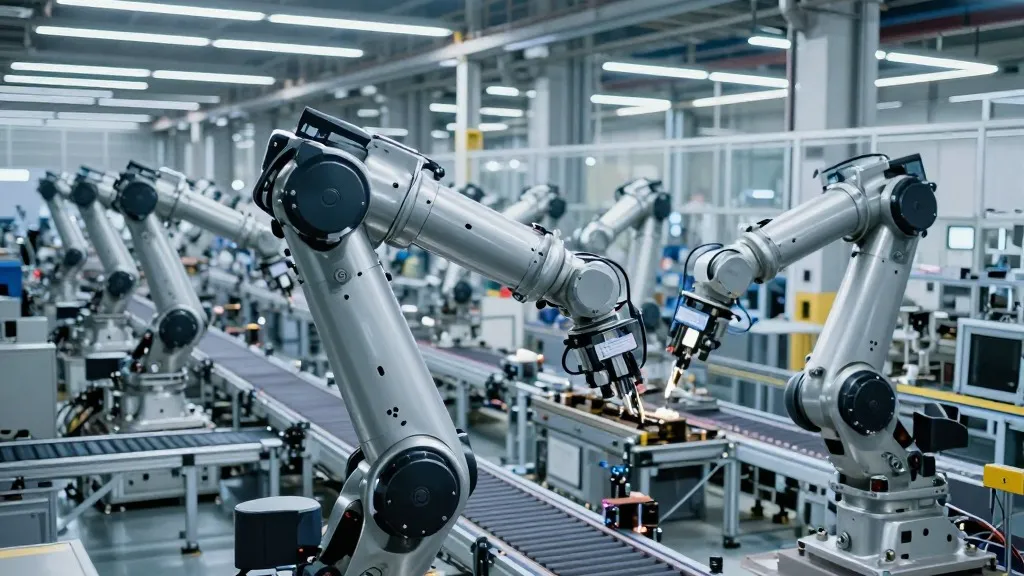
Tesla has officially begun constructing Optimus on the high-volume assembly line within its Fremont facility, marking a pivotal shift in the company’s manufacturing focus. The automaker stated that the units rolling off this specific line represent the first production-quality robots it has ever manufactured, signaling that the hardware has met the rigorous standards required for a commercial product. This transition confirms that Tesla’s current manufacturing processes are now suitable for mass production of its humanoid robot.
The physical transformation of the factory floor was rapid. Tesla cleared the space previously dedicated to Model S and Model X production in just 46 days this spring. That area is now configured for robot production with a design capacity of one million units annually. On the company’s third-quarter earnings call, Elon Musk confirmed that most of the necessary equipment for this expanded capacity is already installed in Fremont. Output is expected to scale significantly, with targets set to approach 20,000 robots per week as the line reaches full operational speed.
Musk described the production ramp-up as a classic S-curve, noting that the initial growth phase would be gradual. "The growth of Optimus is an S curve, but the initial curve is a shallow slope," he explained. The engineering team is currently focused on refining the robot’s artificial intelligence, electromechanical design, and overall reliability. These improvements are scheduled for completion by the end of next year, at which point Tesla plans to begin delivering Optimus units to external clients for tasks that are dangerous, repetitive, or require around-the-clock operation.
A significant challenge in developing the robot has been the lack of a large fleet to generate real-world training data, a resource Tesla leverages for its autonomous vehicles. Musk acknowledged this disparity, stating, "A big difference with Optimus versus the cars is we don’t have this vast fleet of cars from which we can gather training data." To solve this, Tesla is implementing an "Optimus Academy" where 10,000 to 20,000 robots will practice a diverse range of tasks. The data generated from these internal trials will be used to train and improve the next iteration of the robot’s software, with every unit from the Fremont line contributing to this learning process.
Hardware upgrades are also on the horizon. Tesla intends to integrate its AI5 chip into Optimus units next year to enhance computational power. Musk indicated that a new video demonstration should be released within the next one to two months. This footage will show the robot completing tasks driven by AI rather than preprogrammed motions, a distinction Musk emphasized to differentiate Optimus from rival humanoid demos that rely on scripted routines.
The supply chain is actively scaling to support this expansion. In September, Tesla certified Tuopu, Joyson, and Sanhua as mass-production partners for critical Optimus components. Meanwhile, a much larger dedicated facility is under construction at Giga Texas. Recent aerial footage shows the steel frame of this new plant nearing completion, with Musk setting a long-term production target of 10 million robots annually for that location.
Executives noted that Optimus production costs are trending toward the manufacturing cost of the Cybercab, indicating the robot is engineered for volume efficiency from the outset. However, the hands remain the most complex component of the design. Musk reiterated at the X Takeover event earlier this month that this area is the primary focus of current engineering efforts, as it is essential for the robot’s dexterity and utility in real-world applications.
Source: Teslarati