Tesla's 10-Year Pivot: After Dismissing Maps, FSD Now Relies on Them
Tesla is now building its own road data to address persistent errors in its Full Self-Driving system, a strategy it long criticized.
By Kendra Konchanuk ·
For years, Tesla's leadership publicly rejected the idea that self-driving cars need detailed maps, labeling them a weakness. This week, the company confirmed it is doing exactly that: developing proprietary maps to improve the reliability of its Full Self-Driving (FSD) software. The announcement came during a shareholder Q&A session on Tesla's Q3 2026 earnings call, marking a significant departure from the company's long-standing stance against external mapping data.
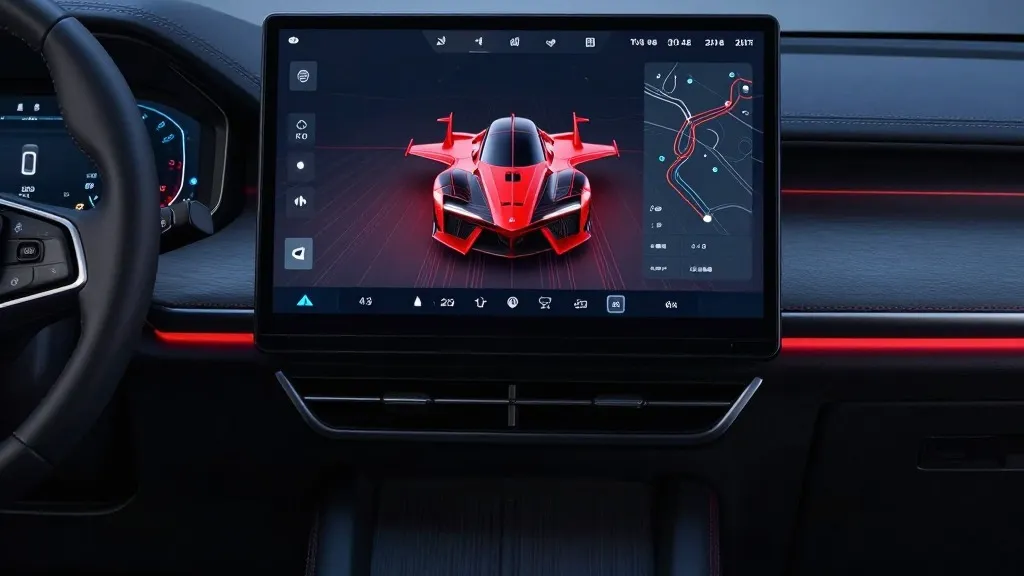
The request came from a retail investor concerned that mapping issues regarding speed limits, parking, and routing continue to plague FSD performance. In response, Tesla’s VP of AI, Ashok Elluswamy, stated, “we shouldn't be depending on external people's maps.” He explained that Tesla is constructing a new AI-based mapping and navigation architecture designed to utilize data learned by the fleet collectively. This system will also learn individual driver preferences and respond to voice commands.
This technology is scheduled to begin handling trip initiations and completions with the upcoming FSD v15 release. Over the subsequent months, the system is intended to take over navigation, parking, and destination handling. This move represents a stark contrast to Tesla's historical messaging. In 2015, the company began building high-precision maps, but by 2019, Elon Musk described such high-precision lane maps as a “huge mistake” and a “really bad idea” that renders a self-driving system “extremely brittle.” At that time, Tesla argued that cameras and AI alone could solve driving anywhere without detailed maps.
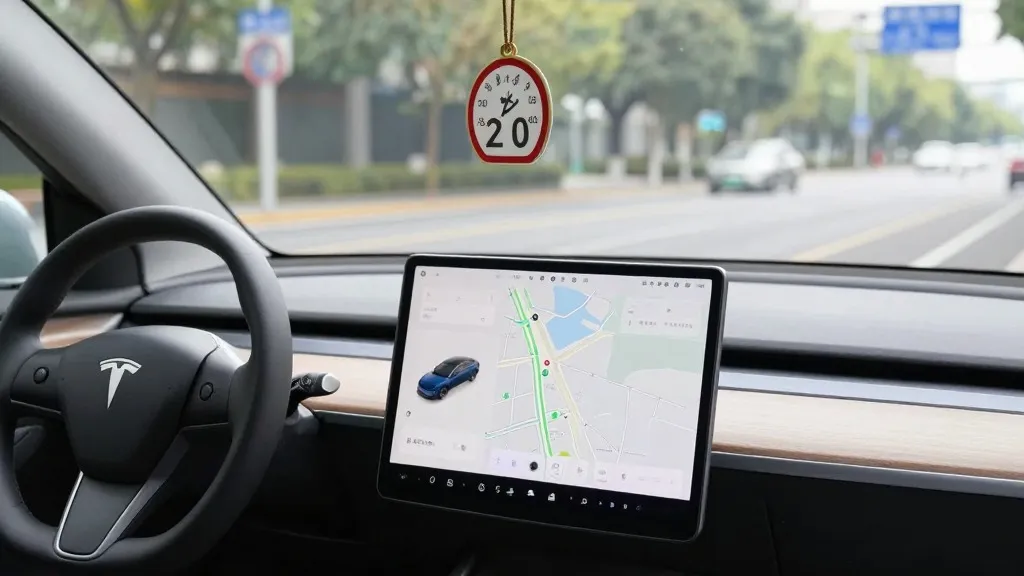
However, Tesla’s current vision system is failing to reliably handle critical environmental data. In September, a Belgian road safety group found that FSD vehicles exceeded speed limits in 55% of 30 km/h zones tested in Brussels, with the car's screen often displaying 50 km/h. Furthermore, US regulators at NHTSA are weighing an investigation into reports that Tesla Robotaxis speed through active school zones, a probe covering approximately 1,000 Model Y and Cybercab vehicles.
This development highlights a convergence between Tesla and its primary competitor, Waymo. Waymo creates high-definition maps using lidar-equipped vehicles before launching service, and updates them continuously. Tesla is now describing a similar process where its cars collect environmental data to feed a map that assists every vehicle in driving. The primary technical difference remains that Waymo utilizes lidar sensors on its fleet, whereas Tesla relies on cameras.
This shift also aligns with how Tesla’s Robotaxi service currently operates, which involves functioning city-by-city within small, geofenced service areas. While Tesla is not currently describing centimeter-level HD maps, a fleet-built map that increases in detail over time could evolve toward that capability. The company has pushed unsupervised FSD for consumer cars to Q2 2027, limiting it currently to its Robotaxi fleet.
While every serious self-driving program utilizes maps, Tesla's previous narrative explicitly dismissed them as unnecessary for a general solution. The company is now adding the map and operating within geofences, which it previously identified as a feature of non-autonomous systems. Ten years into its self-driving effort, Tesla is implementing the specific technologies it once claimed would prevent a vehicle from being a “true self-driving system.”
Source: Electrek